Case Study · 2026
NDA Platform Summary
From sensor noise to operator decisions
Assets. Incidents. One model.
RoleLead Product Designer
ScopeAsset Modeling · Incident Management · Reporting · Administration · Design System
DomainIndustrial IoT / Energy Infrastructure
PartnerBaker Hughes & Sibintek (GE Predix)
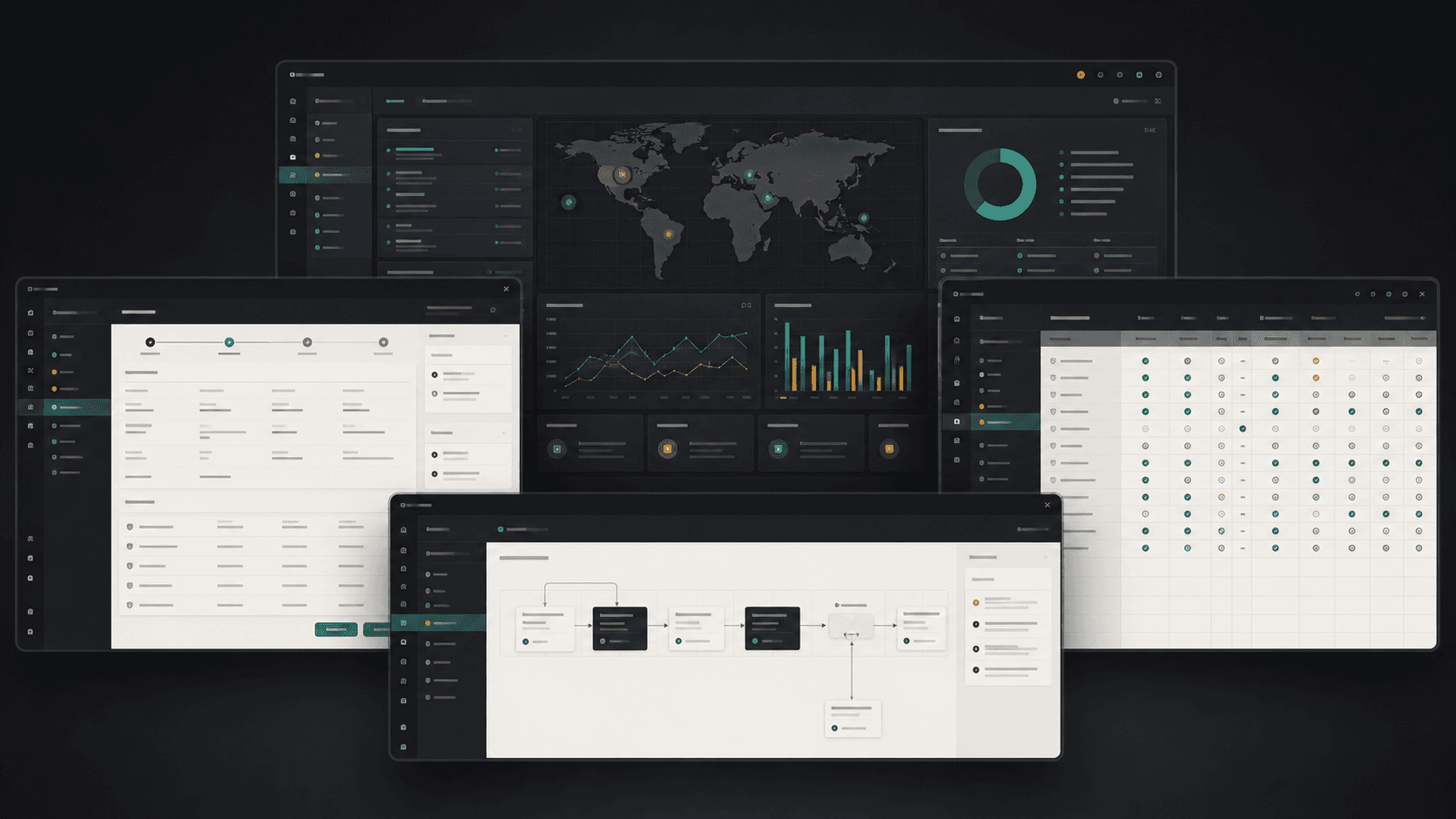
Platform Montage
Overview interface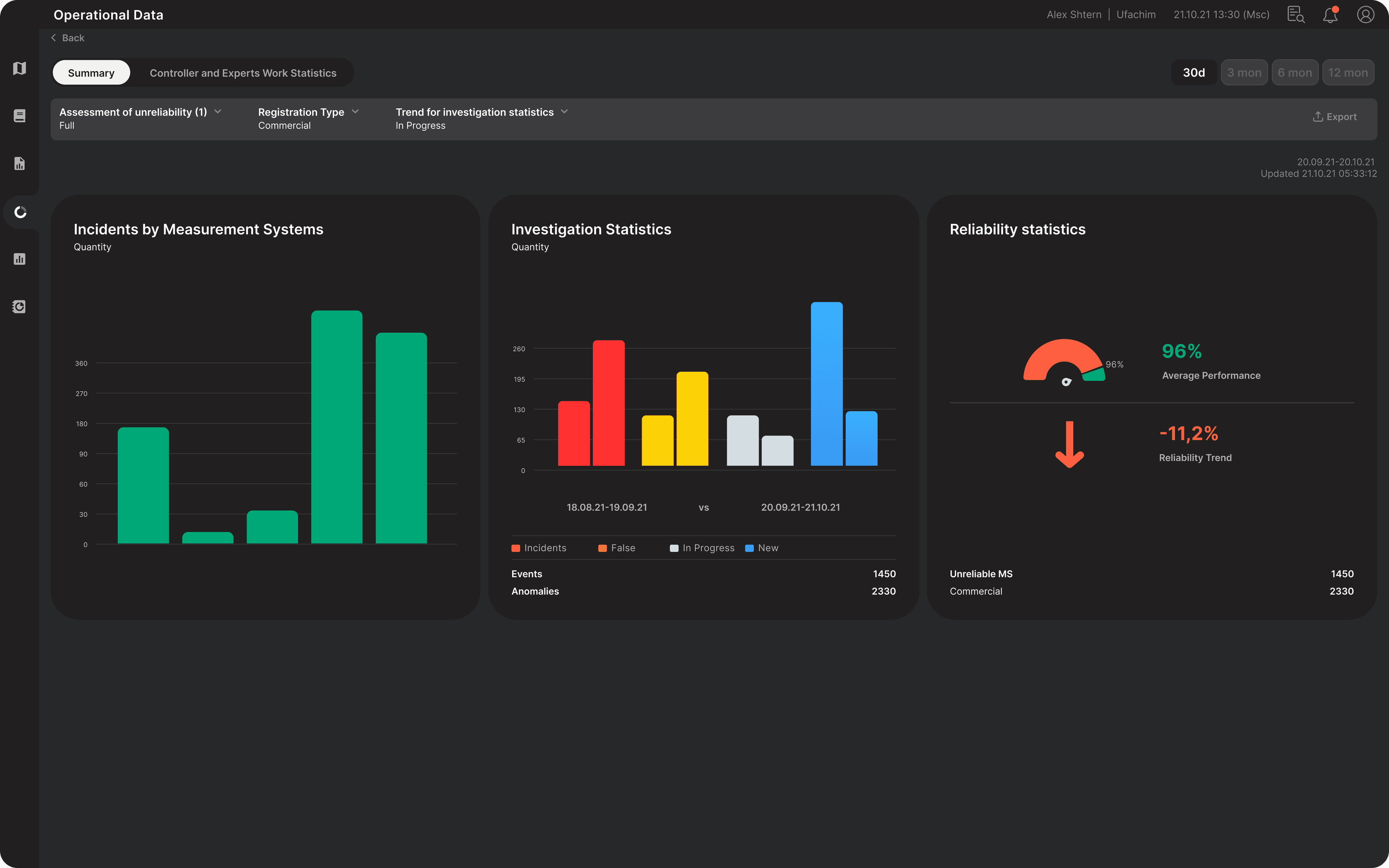
01 · Domain Discovery
Mapping Industrial Workflows
The platform handled critical operations, but workflows were split across services and mirrored system architecture instead of operator mental models.
To redesign the experience, I:
- 01/Defined operator, engineer, and admin archetypes.
- 02/Mapped workflows from alert to maintenance closure.
- 03/Linked assets, alerts, permissions, and reports.
- 04/Built modular IA so new platform areas could fit the same model.
Ecosystem Mapping Diagram
Asset Registry (Physical)↔Telemetry Signals (IoT)
Incident Triage (Logic)↔Governance Policies (Admin)
Incident Response Journey Map
Stage 1Telemetry Alert
Stage 2Asset Hierarchy Lookup
Stage 3Triage & Escalation
Stage 4Resolution Log
02 · Pillar 1
Asset Modeling Digital Infrastructure Map
Asset Modeling became the platform foundation: a digital map of equipment, facilities, and dependencies.
What I Designed
Asset hierarchiesRelationship managementAsset lifecycle workflowsConfiguration interfacesValidation states
Embedded prototype
Telemetry Studio
Loading live prototype
If the embed is blocked by the prototype host, open it in a new tab.
03 · Pillar 2
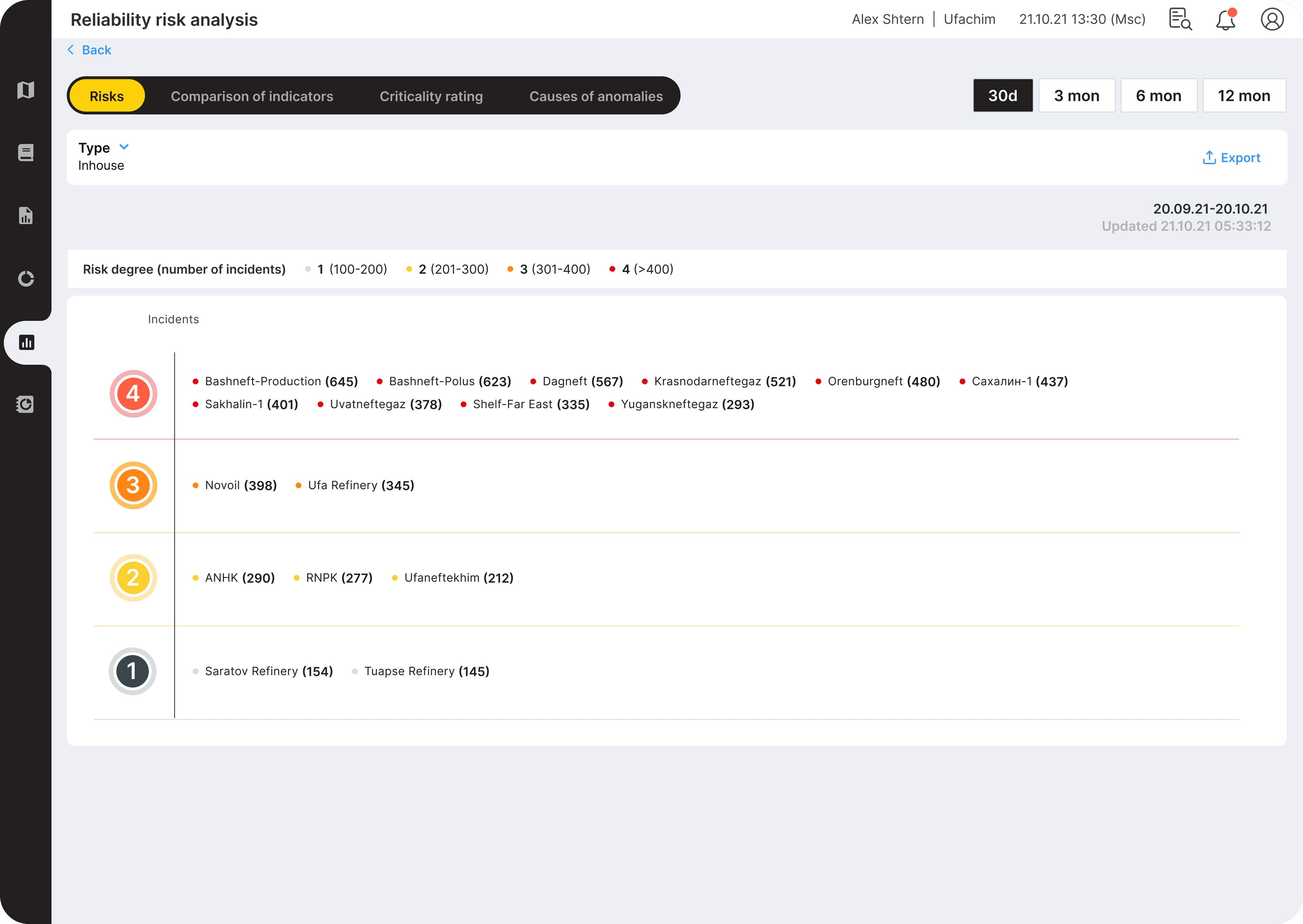
Incident Management From Alert to Resolution
Operators needed a structured path from alert to resolution.
Key Outcome
Faster triage with a repeatable operating process.
What I Designed
Incident creationTriage workflowsEscalation pathsStatus managementResolution tracking
04 · Pillar 3
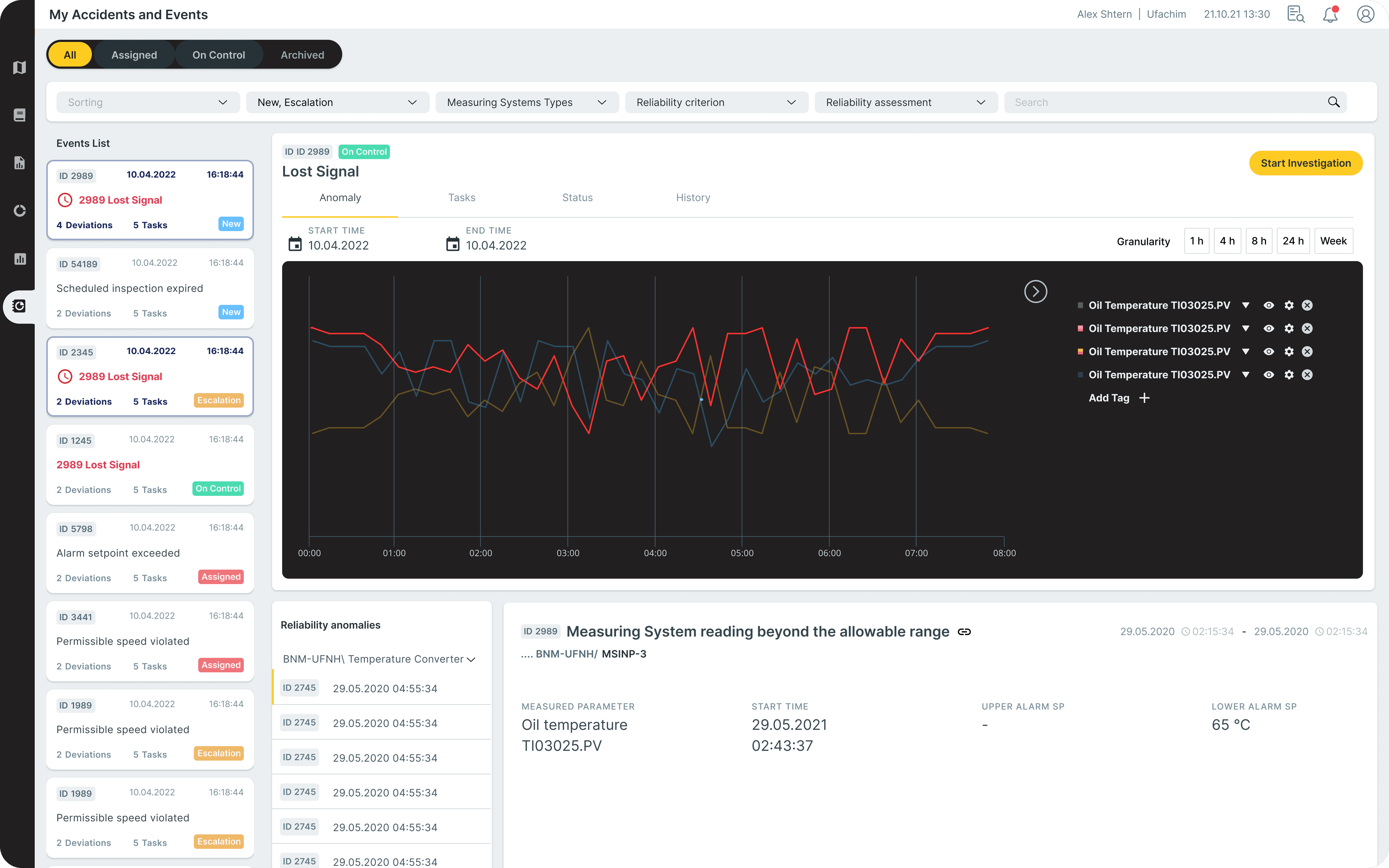
Operational Visibility Dashboards & Reports
Teams had telemetry, but not a clear view of asset performance.
Highlights
Performance dashboardsAsset monitoringKPI trackingTrend analysisExecutive reporting
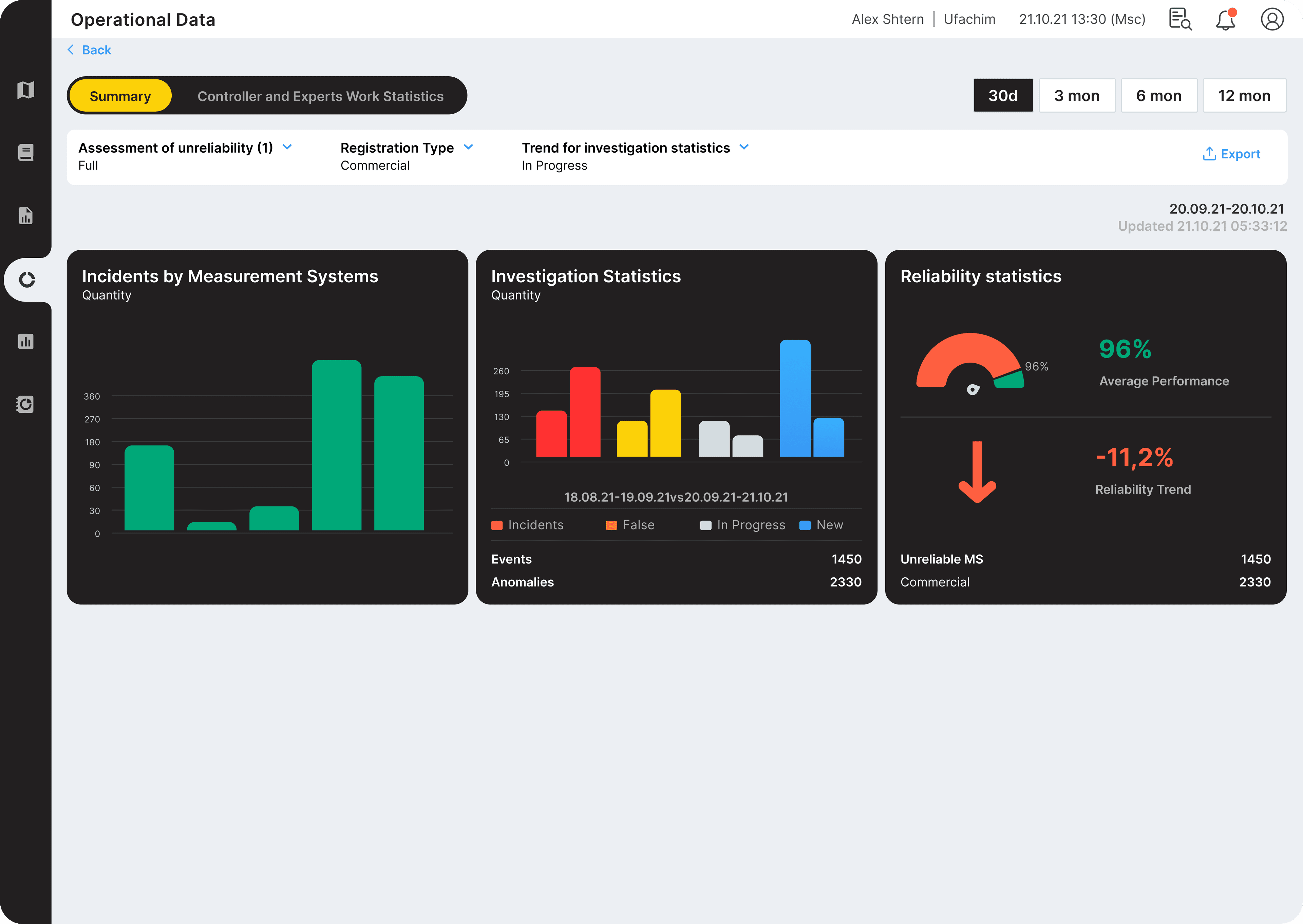
Primary operational dashboard views
Operational Data
BackAlex ShternUfachim21.10.21 13:30 (Msc)⌕◌
20.09.21-20.10.21Updated 21.10.21 05:33:12
Investigation Statistics
QuantityIncidentsFalseIn ProgressNew
Reliability statistics
Quantity96%Average Performance
↓-11,2%Reliability Trend
Operational Data
BackAlex ShternUfachim21.10.21 13:30 (Msc)⌕◌
20.09.21-20.10.21Updated 21.10.21 05:33:12
Incidents by Measurement Systems
QuantityInvestigation Statistics
QuantityIncidentsFalseIn ProgressNew
Reliability statistics
Quantity96%Average Performance
↓-11,2%Reliability Trend
05 · Pillar 4
Industrial Rule IDE Governance Layer
Industrial IDE for digital twin operations.
Operational intelligence flow
SCADA
Digital Twin
Asset Mgmt
Observability
Industrial Rule IDE
Unified model, logic, and operations layer
01
Monitor
Asset health
02
Model
Relationships
03
Define
Automation logic
04
Investigate
Incidents
05
Deploy
Rules safely
06 · Design Infrastructure
Design System Shared Product Foundations
I led a shared design system to support multiple industrial products and teams.
Faster deliveryReusable layouts for browser prototypes
Consistent UXOne language across microservices
Engineering collaborationTokens connected design to implementation
Rapid validationOperators tested flows before build
07 · Impact
Platform Impact
Before
Fragmented tools, hidden dependencies, inconsistent UI.
After
One operating model for assets, incidents, reporting, and governance.
01
Unified
Asset, incident, and reporting flows
02
Faster
Reusable patterns for product teams
03
Safer
Inline hierarchy and dependency context
04
Extendable
Shared standards for new modules
Related use case
View administrative services →The platform also needed an operating model for administration.
A deeper study of how people, services, permissions, change, and governance became one coherent administrative layer.
System map · access · change · audit